

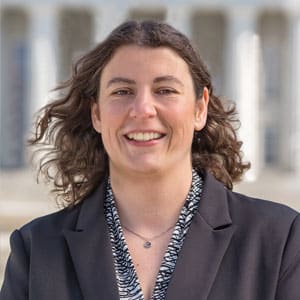
Monique Priestley is a Vermont State Representative focused on data privacy, AI, right to repair, and the future of work. Monique serves on the House Commerce & Economic Development Committee, Joint IT Oversight Committee, and multiple national tech policy task forces. She was named a 2024 EPIC Champion of Freedom.







Here’s a glimpse of what you’ll learn:
- Monique Priestley’s career journey from tech roles and community development work to serving as a Vermont State Representative, leading privacy and AI policy initiatives
- Overview of Vermont’s Data Broker law and the state’s first AI task force
- Challenges of advancing complex privacy and AI bills during short legislative sessions
- Why many state privacy bills stalled in 2025 despite broad public interest
- Why several states may successfully advance stronger privacy legislation in 2026
- Consumer misconceptions about privacy and how it impacts their daily lives beyond social media use
- The importance of passing laws that protect both children and adults from digital harms and AI-driven risks
- Steps companies can take to build consumer trust through transparent privacy and AI practices
In this episode…
State privacy laws are evolving faster than ever, yet the dynamics shaping them often remain out of view for most organizations. Technology shifts quickly, and the issues raised in proposed privacy and AI bills require far more research and preparation than the calendar allows. That’s why lawmakers work year-round to understand these complex technologies and collaborate with their peers in other states to refine definitions and bill provisions, ensuring that appropriate privacy protections are in place.
Many states entered 2025 with strong privacy bills on the table, yet progress slowed as industry counterproposals and competing drafts drew support away from stronger models, making it harder for legislators to keep consumer privacy protections intact. Vermont State Representative Monique Priestley has seen this firsthand and brings a unique lens to this dynamic, drawing on her discussions with the public and her collaborative work with lawmakers across the country. As public concerns about privacy and AI grow and privacy laws evolve, companies will need to be proactive about the steps they take to protect people’s data and be clear about how those protections work.
In this episode of She Said Privacy/He Said Security, Jodi and Justin Daniels talk with Monique Priestley, Vermont State Representative, about the realities that shape state-level privacy and AI legislation. Monique discusses the behind-the-scenes work required to educate lawmakers and build strong, technology-informed privacy and AI bills, and what might change in the year ahead. She also shares insights into the public’s rising concerns about how their data is used, highlighting the steps companies can take to build trust.
Resources Mentioned in this episode
- Jodi Daniels on LinkedIn
- Justin Daniels on LinkedIn
- Red Clover Advisors’ website
- Red Clover Advisors on LinkedIn
- Red Clover Advisors on Facebook
- Red Clover Advisors’ email: info@redcloveradvisors.com
- Data Reimagined: Building Trust One Byte at a Time by Jodi and Justin Daniels
- Monique Priestley: Website | LinkedIn
Sponsor for this episode…
This episode is brought to you by Red Clover Advisors.
Red Clover Advisors uses data privacy to transform the way that companies do business together and create a future where there is greater trust between companies and consumers.
Founded by Jodi Daniels, Red Clover Advisors helps companies to comply with data privacy laws and establish customer trust so that they can grow and nurture integrity. They work with companies in a variety of fields, including technology, e-commerce, professional services, and digital media.
To learn more, and to check out their Wall Street Journal best-selling book, Data Reimagined: Building Trust One Byte At a Time, visit www.redcloveradvisors.com.
Intro 0:01
Welcome to the She Said Privacy/He Said Security Podcast, like any good marriage, we will debate, evaluate, and sometimes quarrel about how privacy and security impact business in the 21st Century.
Jodi Daniels 0:21
Hi. Jodi Daniels, here, I’m the founder and CEO of Red Clover Advisors, a certified women’s privacy consultancy. I’m a privacy consultant and certified informational privacy professional providing practical privacy advice to overwhelmed companies. Hi.
Justin Daniels 0:35
I’m Justin Daniels, I am a shareholder and corporate M and A and tech transaction lawyer at the law firm, Baker Donelson, advising companies in the deployment and scaling of technology. Since data is critical to every transaction, I help clients make informed business decisions while managing data privacy and cyber security risk. And when needed, I lead the legal cyber data breach response brigade. And
Jodi Daniels 0:59
this episode is brought to you by odd claw on my head. Everyone. Okay. This episode is brought to you by Red Clover Advisors. We help companies to comply with data privacy laws and establish customer trust so that they can grow and nurture integrity. We work with companies in a variety of fields, including technology e commerce, professional services and digital media. In short, we use data privacy to transform the way companies do business together. We’re creating a future where there’s greater trust between companies and consumers to learn more and to check out our best selling book, Data Reimagined: Building Trust One Byte at a Time. Visit redcloveradvisors.com. So it was a little strange, because this morning, I went into the coffee shop freezing in my winter coat with the pumpkins decorated outside, because we are recording where it is technically November, but it feels like January. It’s very it was very confusing to try and go and get coffee with pumpkins out when it was so darn cold, maybe you’re just a weenie. Oh, well, there’s that too. Thank you so much. Okay, I see what kind of podcast we’re going to have here today. So with that, people, I hope you are warm and cozy wherever you are, and today we have Monique Priestley, who is a Vermont State Representative focused on data privacy, AI, right to repair and future of work. Monique serves on the house Commerce and Economic Development Committee, joint oversight committee and multiple national tech Policy Task Forces. She was named a 2024, epic champion of freedom. We’re so glad you’re with us today. Yeah, thanks for having me. We hope you’re warm and cozy. Thank you. Why are you looking at me like that? What have I done now? I This is, I don’t know, just don’t get me into a case of the giggles. That’s fun. No, yeah, carry on.
Justin Daniels 3:08
So Monique, as we begin our conversation, would you like to tell us a little bit about your career journey?
Monique Priestley 3:15
Yeah? Sure. Yeah. Thanks so much for having me. So, yeah, my career has kind of taken two kind of parallel paths. So on the one hand, most of my like paid work has been in tech, so starting at like hardware and network kind of administration, and then going into web design and front end design of like apps for startups, and then going into software as a service for, like, an ED Teck software as a service that I had most of the roles, except for, like sales and back end engineering and so everything from customer support to implementation to integrations and payment processing and data migration and product management, customer support, and then the other kind of parallel has been a lot of community and economic development roles all to kind of lead up into getting into the legislature and then kind of taking the lead on consumer tech policy.
Jodi Daniels 4:17
I think it is so fascinating your tech background, helping to craft and talk about AI and privacy from a government point of view, that is uncommon, it seems. And I think that it’s just, it’s really, really interesting, and I think you have a really solid foundation. Which brings me to, you know, a lot of people are familiar with Vermont and the Data Broker law, and as we just talked about, especially in our intro right you’re on the front lines of state privacy legislation. What experience do you think Vermont’s push into the Data Broker legislation and regulation? And really protecting consumers stands out to you? Yeah?
Monique Priestley 5:07
So, I mean, yeah, the Data Broker stuff is actually interesting, because in a lot of spaces, when I’m traveling, it’s like the first thing that people, especially in the privacy space, like people mention it. We also had the first AI, like Task Force, like Council established in state government. So that’s always brought up a lot. It is interesting, because now, being on the front lines of all this stuff, I can look back to see maybe how complicated and complex certain provisions ended up by the voices that are involved at the table, I guess I’ll say that. And so looking kind of back at where I am now, like it’s interesting to see Vermont as a leader in that space, and then having us trying to fight to pass new provisions, and then also understanding what probably went into the original things and wanting to change and adjust those, and making sure that we’re actually protecting people and updating things like our Data Broker legislation. And also think we have a huge role to play, not only just like establishing a baseline, but helping to make sure other states can get there too and learning from where other states have gone with by copying our work too.
Jodi Daniels 6:26
That’s really interesting. Can you share a little bit more about how on the state collaboration side?
Monique Priestley 6:33
Yeah, so I think this is a I can’t really tell how unique this is, but it feels anecdotally from both legislators in the state house, and then also, kind of elsewhere and in different sectors, that there’s a number of us that are working together across across the whole country, and really trying to one, learn from each other and figure out what we’re trying to like pass we’re sharing the politics of Like what’s going on on the ground, as far as like, lobbying efforts to fight our stuff, and also sharing, at this point, like, the experts that we’re using to help, either for testimony or to help, kind of adjust definitions or provisions in the bills. And we spend a lot of time together, both online but also offline. A lot of us are part of multiple AI and privacy and cyber security task forces together, so we’re off, and we’re often at like conferences, speaking together. So yeah, in that way, there’s a whole army trying to basically make sure that things are not regulated and or and or regulated with loop holes, and a lot of us are recognizing that and recognize what a beast we’re up against as well. So in the very least, trying to have conversations that are transparent about what’s happening has been really beneficial for a lot of
Jodi Daniels 7:58
Yeah, thank you for sharing. I don’t think people always appreciate that collaboration. So it’s really helpful.
Justin Daniels 8:05
What is the what did? How long is the legislative session in Vermont?
Monique Priestley 8:11
Yeah, so yeah. And this varies in every state pretty significantly, but in Vermont, it is the first week of January, usually through Mother’s Day, and we meet Tuesday through Friday, like, all day long, and so like, I’m live an hour away, so I go and stay in Montpelier during that time.
Justin Daniels 8:30
The reason why I wanted to ask you that is, can you similar to what Jodi was saying? Take us a little bit behind the scenes as to how it works if new privacy or with AI legislation is being considered, because that’s a really short time period to pass a law. And then I guess if it doesn’t get passed or it meets certain kinds of resistance, then I guess there’s this whole period of time when you’re not in session, where things can be worked out or discussed or addressed. Yeah.
Monique Priestley 9:01
So this whole thing has been wild because, yeah, it’s not enough time with how complex these bills are. It’s not enough time to learn to get everybody up to speed, for even one person to get up to speed, and then, let alone get a whole committee up to speed, like, let alone get an entire House of Reps, and then the Senate committee, and then the Senate, like the Senate as a whole, and then the governor basically get everybody educated on what’s actually in the bill. It’s not enough time so early on, kind of like second year. And actually, in particular, this third year that we were just in the Speaker of the House and my chair were basically like you are now completely dedicated to consumer tech policy for all your time, which for me is very much full time, year round and double time kind of during session. And that means that, for the most part, with these I’m spending a ton of time all year, having. Often meeting with people and working on definitions and trying to find witnesses and trying to figure out have any conversations with people who are willing to talk through the actual like implementation of the policies, and then doing edits and stuff as we go so. And then, once we get into session, it’s basically a scramble to I, what I tend to do is host non quorum, less a less than a quorum study sessions with all my committee members and any senators, and go line by line through these and answer, address all of kind of the policy pieces and explain the tech and implementation, but then also explain all the politics of the arguments that everybody will hear and be confronted with, so they can kind of understand a baseline of of how they can counter and or questions they can ask.
Justin Daniels 10:57
So I guess one of the things we should be cognizant of, especially in Vermont, unless it’s some front burner issue, it really can take multiple years for legislation to get done, especially on complicated technology topics that a lot of representatives may not have a base understanding of. Oh, for
Monique Priestley 11:17
sure, and even Connecticut, like James Maroney says all the time. His Privacy Bill took three years to get passed as well. So, yeah, that’s and that is more of a, less of a I mean, it was definitely a lobbying fight for him, but it was less of a lobbying fight. It tended to be more like favored by industry.
Jodi Daniels 11:38
Yeah, go ahead. I’m sorry you’re so excited.
Justin Daniels 11:42
No, I just, I guess the other thing that’s interesting Monique is like, look at the you the EU AI act. They passed it a while back, and it already seems obsolescent. So it seems like in the three years it may take to pass an AI law, the law might have to change dramatically, just because the technology has changed so quickly, it just seems like that’s another added layer that makes it really tough as a champion of common sense legislation to get it done.
Monique Priestley 12:15
Yeah, I mean, that’s so with the privacy stuff and with, say, the on the age appropriate design code that I passed, and any of the AI bills, like, I’m updating those maybe every two weeks, generally. And that’s, that’s one of those things where the primary lobbying attacks will be like, you have to have everything consistent with all of the other states. And it’s like, yeah, but technology evolves like, all the time, so like, at one point, do we actually give a shit about keeping up with the tech? And they don’t. They don’t. They don’t want it to but, but yeah, it does. I with the age appropriate design code. I was watching all of the lawsuits happening against all of the states My cat is not going to be on the podcast, sorry. And then making changes as we go, and having to reintroduce amendments over and over and over again, and then catching all of the players. Basically, my committee members, House members, Senate members, Senate committee members. Every time I was going to make a change, I’d also have to educate everybody and be like, here’s why, justify why I wanted to make a certain change, a
Jodi Daniels 13:20
question that’s been on a lot of privacy pros minds. And I recently talked about this. And Monique, you had a you had a post on it. So given what we just talked about, how it can take years to talk about privacy bills, there are states that I’ve been talking for years on privacy bills. What’s interesting though, in 2025 a new one at a comprehensive state level, did not get past we still have a little bit of time left, so maybe one will happen. But right we I’m curious for your thoughts and really to also help educate. There’s definitely been work. We’ve we saw the flurry of bills that were introduced, and again, it’s not new this year. There’s been bills last year that were introduced and didn’t move forward. What are your thoughts behind where we are now, and maybe what your prediction might be for next year? Yeah.
Monique Priestley 14:10
So, yeah. The big thing there is, like, there were a ton of privacy bills introduced in nearly every case I can think of, like Maryland, Maine, New York, Vermont, Washington, like a bunch of us, had really strong consumer protective models that were closer to what Maryland passed at the same time. Industry ran around basically submitting counters to all of those and so and the counters are an easier sell for the public. It’s like easier to spin. It’s usually the chambers of commerce and stuff that are rallying and Google sending, and Amazon or whatever, all of the entities kind of sending through their, you know, my business type of style offerings, to all of their businesses, saying, like, hey, so the legislators are going to mess with your business. And so. You should go fight them, and you should push for that. You should support this thing. So at the same time, we’re like, trying to do all of the work we just talked about, on trying to even get something moving and educating people all the time, you’ve got this counter proposal that’s telling a bunch of misinformation and stuff about not only about the strong, consumer protective one, but also misinformation about what’s included or not included in the other model. And so across the board, basically all of us across the country were spending all of our time just supporting each other in holding back the counter proposals and trying to make sure that we could hold on the strong ones. And so that’s what happened in every state that I can think of, is we all still have the strong models that are going and we were just trying to back off the like industry ones.
Jodi Daniels 15:51
So if you had a crystal ball, do we think it will be a repeat next year? Or we some of the time, because bills have already been introduced. They can be dusted off and save a little bit of time to ward off whatever. Yeah, you know the counter will be.
Monique Priestley 16:07
I don’t want to jinx any of us.
Jodi Daniels 16:11
Hey, Jodi and Georgia has no rights for a really long time.
Monique Priestley 16:14
So, yeah, I would place money on several of us passing strong ones, honestly, like the I mean, one of the reasons I’m saying that is because, one, I know what’s going on in other states right now behind the scenes, and they’re feeling pretty good. But also, I ran around the state like part of I went to my speaker and my chair when we were trying to fend off the industry model, and a whole bunch of stuff happened there. But at the end, I was like, Please, let me pause it. I will run all over the state physically, and I will get Vermonters rallied up to come into the building next year. And so I’ve been going all over the state talking about privacy with people. And people are especially with everything that’s happening federally. People are pissed, they’re scared. They want to help. And people are just coming out of the woodwork, whether they’re working in industry or the advocacy or they’re they’re just like normal Vermonters and small businesses who are terrified of what’s going on. And so I don’t see that that energy will show up in the state house like I will make sure it shows up and I don’t see how we don’t move something forward next year.
Jodi Daniels 17:26
I know Justin is so excited to ask a question, and I’m going to interrupt because I wanted to ask my question. So, hey, it’s your podcast. No, it’s our podcast, the hired help, or the hired help. So Monique real, I think a lot of companies struggle to get privacy attention it deserves in companies, because the view is from some it doesn’t matter. People don’t care. You just shared? Oh no, look at all the people and they care. Can you share a few of the areas, maybe, as it relates specifically to the privacy parts. Because I think people listening will find that so helpful. To be able to take back and say, No, look at this is where the concerns are.
Monique Priestley 18:17
Yeah, yeah. And actually, so some of my the town halls are actually starting off where a lot of people will be like, Oh, I’m not on social media, so I don’t care, or I don’t think that I have any agency in this, or doesn’t really affect my life. And so I do this. Like, basically we’ll go through and be like, what is privacy to you? Which is always fascinating. And then I will do this basically like, well, let me tell you. Basically none of you mentioned anything that’s not social media. You think that none of this touches you? And I go through like 15 examples where I’m like, walking to the grocery store, walking into your apartment, and somebody has a ring camera on their door, like your car insurance rates going up, your health insurance being denied, like your grocery price is rising, your airline ticket price is rising. And so once I go through like, 15 examples of real things where they just have to exist as a human operating in the world with and they may not even own a phone, they are pissed, and they walk away just so mad. They’ve all told me, and they followed up and and some of them, they really are, they do understand, like, I’ve had people who are legal immigrants, who are like, I feel like I’m being blackmailed by society, like by social media companies, basically because I want to exist in a world where I can talk to the people I know, but I that information is now being used, like weaponized against me. And so I think, like the thing is like, if once the public understands all of these ways that they are already having violations, even without having any kind of like element where they think that they’re actually giving up something they’re so mad, and I think, like the potential for the public to at large, realize what’s going. On and then lose complete trust in much of industry, is a very big risk, but we have to tell that. I think the biggest thing I would say for people in companies, and I’m actually doing privacy and I can, like, compliance in a company right now, it’s wild, is like storytell, like, we need to be more we need to be more transparent with everybody, and make privacy part of, like, daily conversations with people in a way that cuts through the noise. Of like, having it just be whether or not you’re on Facebook,
Jodi Daniels 20:34
I am so grateful for you sharing that. Thank you. I want to package that up now. Justin, you can ask your question.
Justin Daniels 20:42
Okay, so Monique, I know you’ve served on committees where you talk to other legislators and experts in other states, and so I’d love to understand maybe your thoughts, or how you may be hearing about other people. Think about the following. Never thought about this before, but if you are an establishment and you serve alcohol to underage kids, you can lose your liquor license. However, if you’re one of the big tech companies with AI, you can have the 365, 24/7 chat bot you can put out in reports where certain big tech companies are saying, Yes, we’re going to have the AI suggestively talk to children. You’re seeing lawsuits now filed against these companies and states where children have been engaging with AI about how to commit suicide, and the AI is assisting them in that nothing seems to be really happening about this on a federal level. And I just love if you could maybe give us a window, either into your thinking or what you see with other legislators and other states are thinking around these types of issues, because I thought about it. It seems ridiculous to me that you can lose a liquor license, but all this damage is being done to our kids, and somehow that’s different.
Monique Priestley 22:08
Yeah, yeah. I don’t want to swear on your podcast, but yeah, it’s messed up. I’m so, so the wild thing here, I think that I get frustrated with, is all, yeah, so totally agree with the the liquor license, like losing liquor license, like there’s so many, there’s so many parallels to, like, analog versions of harms that we have laws to cover, and then it’s like the Same harms that we’re creating online, book companies will basically claim that either they’re already covered by the analog but not really, because someone will just fight it in court and then, and then we have to, like, try to come up with this whole digital version of trying to, like, save ourselves from the same, same harms that we already have existing laws for. And the frustrating thing for me with kids laws, and so I passed an issue appropriate design code. And I did that because, one, we were able to put really strong privacy protections in and, like, I felt good about doing something politically, it’s kind of a pain in the ass, because I don’t want to just protect kids like yes, kids are at a higher risk for all of these arms and they are preyed on by social media companies because they stand to make a ton of money if they’re able to follow a kid from the time they’re like five their entire life, right? And then also anything a kid wants the parents have to buy. So then they’ve got a whole household wrapped around their finger. But at the same time, I want privacy protections and AI protections for everyone of all ages. I think, like, it is a I really can’t stand the virtual signaling of, like, just doing kids protections, because it’s politically sexy. And I think that at some point we have to have a converse and that that actually gets complicated with like age verification conversations, which I think are are largely just bullshit, and in order to, like, mess the cloud of things up, when I think that really, if we were just having a conversation about protecting everyone at every age, and we wouldn’t get into like age verification, Guess we would just be doing the right thing.
Jodi Daniels 24:23
Yeah, knowing what you know, and especially as someone helping to write these laws, what do you recommend companies think about, what might be the three big areas companies you should be paying attention to this when it comes to privacy and AI,
Monique Priestley 24:47
are these the good actors or the bad actors
Jodi Daniels 24:50
I’m gonna go with? We want the companies who believe in doing the right thing. We’re gonna cool those companies because. I think that’s our I think that’s our audience. We’re gonna go with that good companies.
Monique Priestley 25:06
Thanks. Audience, um, three things. I mean, I think so I I think part of the thing is like paying attention to the noise and yeah, I guess the clouded the ways that we like to cloud the messaging, to make things seem way more complicated or egregious than they are, in order to get everybody riled up against certain things. So I would say digging in more, and then we’re having conversations with with legislators and stuff like, I actually like, call out, like, call out to anybody listening. Who’s the good actors who want to have a conversation? I think that legislators want to do the right thing. Hardly any of us have staff. Hardly any of us actually have expertise in this stuff. And so I think it’s easy for lobbyists to, like, raise a bunch of alarms when if most of most of them actually have not read my bill. And so that’s also a thing. I think that another thing is, like, the whole thing about consumer trust, like, kind of like public, the public, I think the public is way more kind of on a line where they don’t necessarily think that they’re putting themselves at risk or they have to. And I think the moment that the public at large realizes that actually companies are taking advantage of them in ways that they could never imagine, that like that moment, I think is is not too far away, and I think companies are going to have to, I think the companies will have to be more aggressive about being protective and being loud about the fact that they’re protective, and they actually take this stuff seriously. I think that’s a competitive advantage that they can have moving forward. And I don’t know what a third one would be. I don’t know what a third one would be.
Jodi Daniels 27:08
Sorry, that’s all right. Thank you.
Justin Daniels 27:12
So when you’re not engaging with all these different laws as a privacy expert, as a state representative, what do you like to do for fun?
Monique Priestley 27:23
So I really feel like be outside paddle boarding and that kind of stuff. Honestly, I travel a ton for legislative stuff, but that is also super fun. And so I like running around cities, having coffee, meeting people, and, yeah, taking taking in all the food and the drink and the experiences of traveling.
Jodi Daniels 27:42
Well, if people would like to learn more or to connect or follow your work or support your work, where can they go?
Monique Priestley 27:49
Yeah, thank you for having me too. Um, so Priestleyvt.com, com is where I’ve kind of put all of my legislative I keep track of podcasts like this, newspaper articles, I list all of the bills that I’m currently working on, and just have other ways for people to reach out and LinkedIn, connect with me on LinkedIn.
Jodi Daniels 28:13
Yeah, amazing. Well, Monique, we’re so grateful that you came today to share a little bit of your views and where Vermont is today. So thank you so very much.
Monique Priestley 28:23
Thank you. Thank you so much for having me.
Outro 28:29
Thanks for listening to the She Said Privacy/He Said Security Podcast. If you haven’t already, be sure to click Subscribe to get future episodes and check us out on LinkedIn. See you next time.
Privacy doesn’t have to be complicated.
As privacy experts passionate about trust, we help you define your goals and achieve them. We consider every factor of privacy that impacts your business so you can focus on what you do best.