


My daughter asked me the other day what the point of Labor Day actually is. I told her it’s a day of rest for people who work. She thought about that for a second and asked, “So do I get a day off?” I told her, “You get off because all the teachers who are working get the day off.”
Then I pointed out that retail stores, restaurants, and hospitals are all open on Labor Day, so it’s not really a day off for everyone anymore. She asked why those places are even open on a day that’s supposed to be about rest. My response is that a hospital can never close. For everything else, businesses are trying to attract all the people who have nothing else to do! I love her curiosity. Her questions are the kind that sound simple and then quietly point out something true, something a lot of adults have stopped noticing because we’re used to it.
Where Labor Day actually came from
I think it’s important to understand how something started, where it came from and its origins. Which brings me to the fact that Labor Day started as a labor movement holiday, not an everything is on sale weekend, come spend all your money from laboring on this “fill in the blank.”
The first one was celebrated on September 5, 1882, in New York City, when around 10,000 workers took unpaid time off to march from City Hall to Union Square. Think about that for a second: they gave up a day’s pay to march for the idea that workers deserved better conditions and some say in their own lives. That was no small thing in 1882, when there wasn’t a safety net to fall back on if you lost your job for taking the day.
The years leading up to that parade were brutal for industrial workers. Twelve-hour days, six or seven days a week, were normal. Children as young as five or six worked in mines, mills, and factories with no protections at all. A parallel movement was building at the same time around what became May Day, or International Workers’ Day. The two holidays share the same roots; the U.S. version landed in September partly to distance it from the more radical politics associated with May Day.
It took until 1894 for the holiday to become official. That same year, federal troops were sent in to break up the strike at the Pullman Palace Car Company, and more than a dozen workers died. President Grover Cleveland, trying to repair his administration’s relationship with the labor movement, signed a bill that year making Labor Day a federal holiday, observed on the first Monday in September. Historians still debate who proposed it first, either Peter J. McGuire or Matthew Maguire, two men with suspiciously similar names, but the point behind it has never really been in question.
People who work hard deserve rest, fair conditions, and a say in how they’re treated.
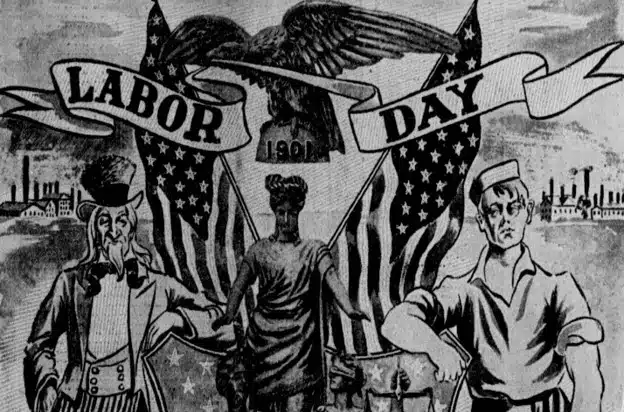
Picture from the Library of Congress. “Today the country pays tribute to labor,” September 2, 1901. Deseret Evening News (Great Salt Lake City, UT), Chronicling America: Historic American Newspapers.
We’re not actually taking the rest we’re owed
A FlexJobs survey from late 2025 found that 23% of U.S. workers didn’t take a single vacation day in the past year, even though 82% of them actually have paid time off available to use. Heavy workloads, fear of falling behind, and guilt about being away from work were the top reasons people gave for not using time they’d already earned.
I don’t think that’s a coincidence of busy schedules. I think it’s a culture problem. All too often, someone says, “I know you’re so busy. Everyone is so busy.”
How did we all get so busy???
Part of the answer is that we’ve made it almost impossible to not be busy. Microsoft’s 2025 Work Trend Index found that during core work hours, the average person gets pinged every two minutes between meetings, email, and chat, which adds up to roughly 275 interruptions in a single day. And it doesn’t stop at five o’clock: 40% of people check email before 6 a.m., and nearly a third are back in their inbox by 10 p.m. Research out of UC Irvine found it takes about 23 minutes to fully get your focus back after one interruption. Do that math, and you can see the problem.
We’re not actually busy 275 times a day. We’re just never all the way in one thing long enough to finish it, and then we feel too behind to take a day off.
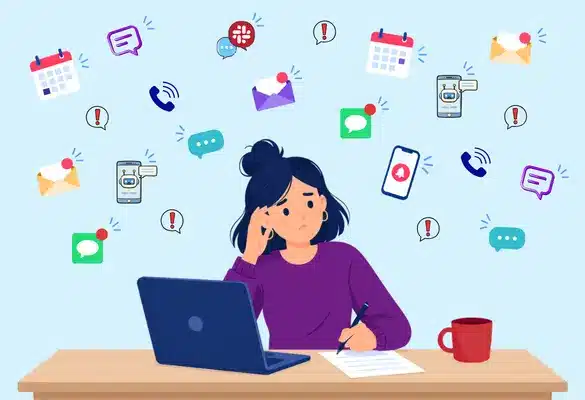
Somewhere along the way, being visibly busy became a stand-in for being valuable, and taking a real break started to feel like a risk instead of a right people fought and sometimes died for.
My daughter’s question is the kind only a kid asks, because kids haven’t learned yet to feel guilty about a day off.
Why vacation actually matters, beyond just feeling nice
I have talked about this before (in great detail about CISO burnout in issue #20), and it’s worth raising again. The American Psychological Association has found that most working adults come back from vacation more positive, with more energy, more motivation, and less stress.
Taking regular time off has also been linked to lower rates of burnout, better sleep, and even lower risk of heart disease, since removing yourself from the environments and habits you associate with stress gives your body an actual chance to recover, not just your mood.
Here’s the part that surprised me most: that same research shows the positive effects of a single vacation can fade within days of going back to work. That’s not an argument against taking time off. It’s the opposite.
It means rest can’t be a once-a-year event you’re hoping will carry you through the other fifty weeks. Personally, I like taking short trips – it’s just enough time away to pull back, be recharged, and also not have SO much work piled up waiting for you.
Rest isn’t the opposite of productivity
I’ve also shared that I’m still learning how to actually rest and that it’s OK not to be productive 24/7.
Stepping away, actually away, not just physically out of the office while still checking email every twenty minutes, is often when your brain finally has room to think instead of just react.
Ideas show up in the shower, on a walk, halfway through a vacation you almost talked yourself out of taking. Today, before writing this newsletter, I had a call with a partner who I realized could help us on a project, and that epiphany came from exercising. I know, I know – I’m thinking about work while doing something fun. It happened because my brain was free. I wasn’t at my desk asking – now who should I call for this issue? Because that doesn’t work very well.
Our team at Red Clover Advisors has taken time away from the office and visited some cool places. Here are a few pictures of their adventures, and check out our full Labor Day post on LinkedIn!

A question we ask everyone else
On our podcast, She Said Privacy / He Said Security, one question we always ask our guests is what they like to do for fun. It’s one of my favorite parts of every episode, honestly, because it’s a good reminder that the people doing serious, high-stakes work in privacy and security are also just people with hobbies, families, and things that recharge them outside of work.
We’ve heard everything from outdoor activities and live music to travel, reading, and a lot of physical activity, basically anything that doesn’t involve staring at a device.
So I’m going to ask you too…what do you actually do for fun?
This is the part where you send me an email and share!
Where I’ll be this weekend
For me, Labor Day weekend also marks something else. It’s the unofficial winding down of summer, which means the best season ever is around the corner. Even though Atlanta doesn’t usually get the memo that it’s fall anymore, with cooler temps til later October, the coffee shops are already marking it with pumpkin lattes. Though I’m really more a pumpkin bread than coffee girl.
This year, I’ll be spending the weekend visiting my mom. It’s been six months since we lost my dad, and this is one of those moments where the calendar makes that distance feel very real. It sneaks up, how a holiday you’ve celebrated the same way your whole life suddenly asks something different of you.
As kids, we used to watch the Jerry Lewis telethon every Labor Day, every single year, no exceptions. That’s where I first watched Sammy Davis Jr. and Ed McMahon, hour after hour, performance after performance, and somehow we never got tired of it. I love these memories with my family and this telethon.
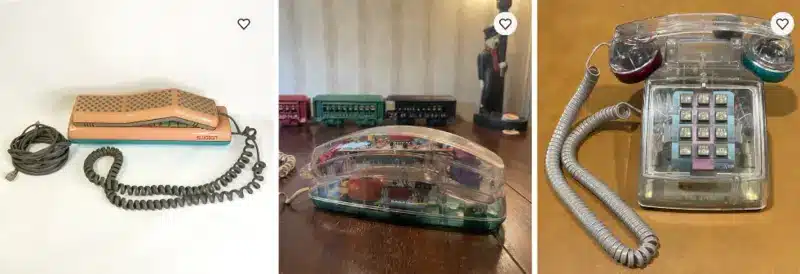
I remember feeling so grown up making my own small donation and calling in on the phone to do it. Remember those phones, the ones attached to the wall, where you actually had to dial a number and wait for someone to pick up?
Searching for a phone pic from the 1980s was just so much fun. I actually encourage you to take a trip down memory lane with these eBay listings (or see what it was like if you’re making me feel really old). I remember ALL of these!
There was something about that ritual, watching it together as a family, year after year, that made the holiday mean more than just a day off from school or work. It made it feel like something we did together, on purpose, every time.
Wherever you’re spending Labor Day, I hope you actually take it off and do something memorable. If you’ve got vacation days sitting unused right now, this might be the weekend to start planning when you’ll actually take them, and to actually mean it when you do.
I often hear that privacy pros use their free time to catch up on podcasts and articles on days off, so in case that’s you, check out our latest podcast episode or article here.
Wishing you a lovely, restful day off,
Jodi
💡 When you’re ready, here’s how we can help:
⚙ Privacy Advisory & Implementation: We help companies navigate privacy requirements with confidence. Our advisory support covers strategy, operations, and real-world implementation.
⚙ Fractional Privacy Services: We provide fractional privacy leadership tailored to your needs and pace. From program development to day-to-day support, we help you build and sustain a strong privacy program.