


The rite of passage to drive a car is thrilling and exciting for a teenager. It often means FREEDOM! For many parents, it’s a harrowing experience to teach their teens how to drive safely with the risks of the road. This school year, our daughter is driving to school while one of us is the passenger.
I have always thought that teaching someone anything crystallizes the content for the teacher. You see it differently. Teaching her to drive really highlights ALL the dangers of the road in a new light.
I have 30+ years of experience in how to navigate these ridiculous drivers. There’s so much to driving – when to speed up, slow down, will there be a light here or a stop sign or nothing, is someone going to dart out in front of me, can I turn right on red – yes at this one, no on the other, spatial awareness, how big is the turn, which car is going to cut me off and how much space should I give it, how do I go past someone, how do I drive in the rain, and so much more.
Every day I see incredibly dangerous drivers, and this morning, after witnessing multiple infractions, I couldn’t help but ask: are the risks really worth it? And then, because I now think in privacy content all day long (don’t know how to shut that part of the brain off), I connected driving to privacy programs. I came home and right away wrote this newsletter.
I hope it’s a reminder to all of us how to drive safely for ourselves, our kids, our friends and neighbors. While we’re at it, I hope it helps manage your privacy program too.
Use your turn signals
Turn signals were invented to communicate with the drivers around you. When no one uses them, no one except you knows what you’re planning to do. Even if you think there’s no one around, someone could come, and it takes less than a second to turn it on. Please use them.
In a privacy program, people in the company need to know what you’re asking of them. Do they go? Wait? Just like how a turn signal communicates what the driver is doing, a privacy program leader needs to have methods of communicating with other business stakeholders.

Check your blind spots
Every car has blind spots, the areas your mirrors just don’t show you. One of the first things I taught my daughter is that the mirrors are not enough. Before you change lanes, you have to actually turn your head and look, because there is almost always something sitting right where you cannot see it. The drivers who only trust their mirrors are the ones who merge straight into someone.
In a privacy program, you have blind spots too. There is the data you know about, and then there is the data and technology hiding just out of view. The tool a team started using without telling anyone. The tracker that has been sitting on the website for years. The new AI tool someone is quietly feeding company information into (like the company that told me today there was someone who uploaded content to a tool that had the public setting turned on. Not ideal).
You cannot protect what you cannot see. Checking your blind spots means actually turning your head and looking, not just trusting the mirror view you already have.
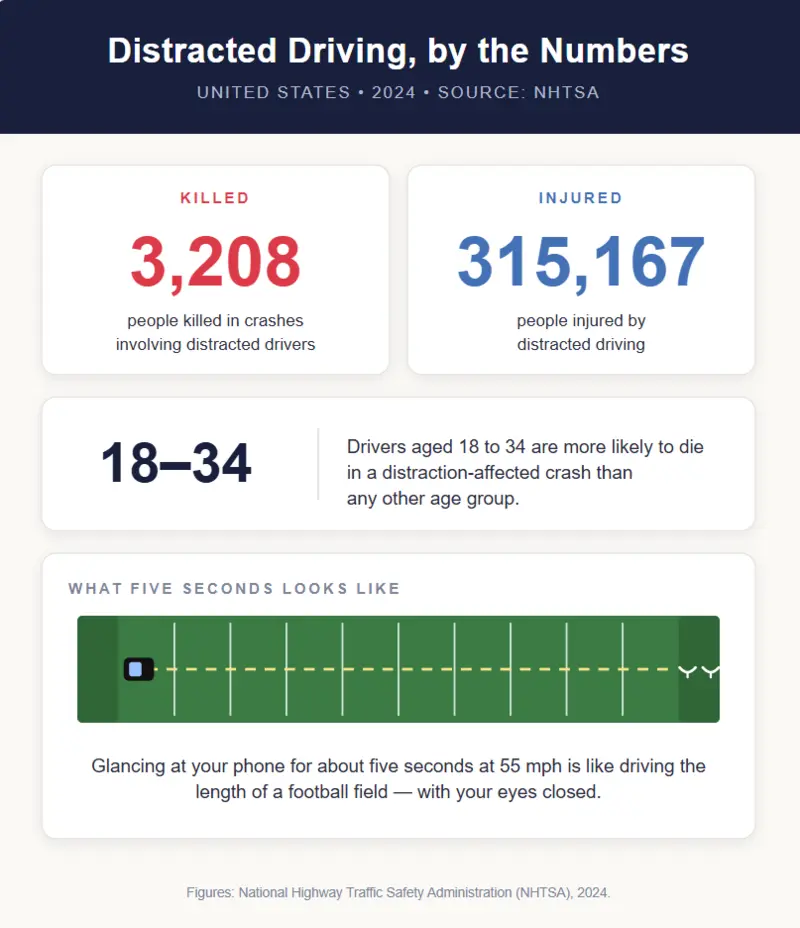
Phones are distracting
There’s a reason states like Georgia have banned holding a phone while driving. It’s unsafe. Unfortunately, drivers seem to think they are immune and they are the exception. Driving this morning, I saw a mom from my daughter’s school go through a stop sign while holding her phone, and she kept looking down at it as she drove through the intersection. This isn’t safe for her or any driver around her.
What is so important that it can’t wait? Remember the era before phones? It all had to wait anyways. Is someone’s life really worth whatever email, text, or social media post that’s being written? Anything that urgent should at least be done using a hands-free option.
In a privacy program, there are similar distractions. It can be a shiny new technology that’s interrupting the flow of the program. A new privacy software that the organization might not really be ready for. Or just the constant barrage of “can we do this?” that might come to you at the very last minute.
Look ahead, not just at the car in front of you
Good drivers are not only watching the bumper right in front of them. They are looking several cars ahead, reading the road, and noticing the brake lights way up the line before they ever have to react. I tell my daughter, do not just watch the car ahead of you; watch what that car is reacting to. By the time the car in front slams on its brakes, you have already lost your head start.
In a privacy program, it works the same way. If you are only reacting to what is directly in front of you, today’s fire, this week’s request, you are always a step behind. Looking ahead means paying attention to what is coming. The new state privacy laws, the hundreds of AI bills, or the enforcement actions. Privacy programs should also focus on the customer expectations that are quietly shifting. When you watch the road ahead, you have time to react calmly instead of slamming on the brakes.
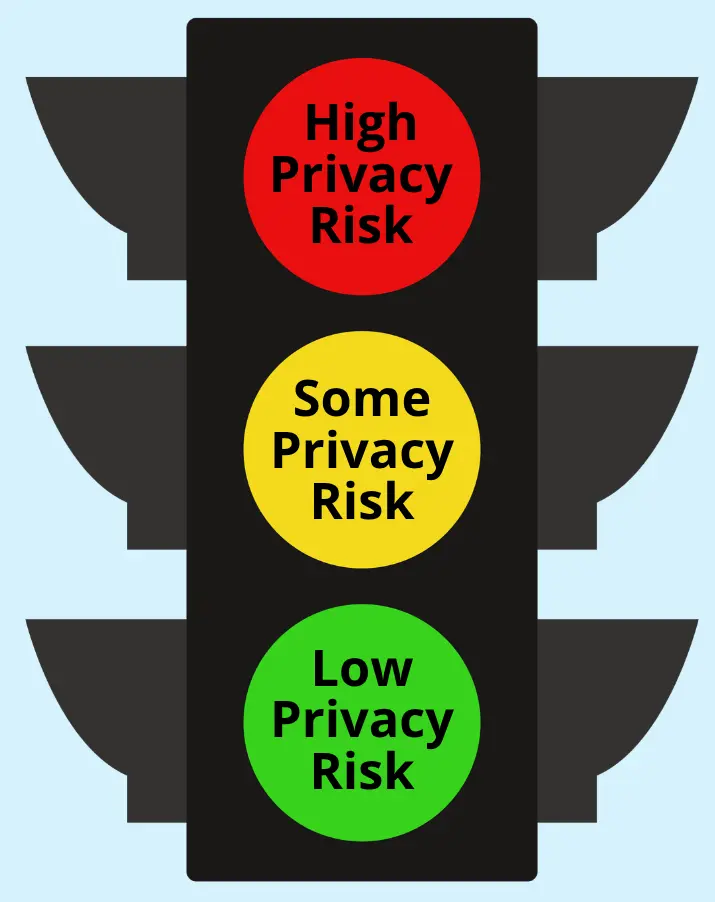
Red lights mean stop
I was at a light patiently waiting my turn. It turns green, but I know better; that doesn’t mean I can actually go yet. A car comes full speed through the red light. It’s not the first time; it happens every day. It’s beyond scary as a driver and especially as a parent of a new driver. Why does someone choose to take this risk for a maximum savings of 2 minutes? Is 2 minutes really that long?
In a privacy program, a privacy risk assessment would signal an activity being too risky with a “red” marker. In fact, my teen driver asked, “Do people use red/yellow/green for other things?”
I said, yes they do, and in fact our reports use those when we’re doing a privacy program assessment. If a company had a big red risk, what would make it barrel through it anyways? This is likely a rare exception, and if it did, it should have an internal review with executive sign-off. Companies are processing data in ways that can be risky all the time. It’s up to the privacy and business teams to work together to identify these new activities and review them so that the company doesn’t unnecessarily risk its brand reputation, customer trust, or compliance obligations.
Cutting people off doesn’t really save time
Yesterday, my daughter watched a sedan cut off a pickup truck and then continued to zig and zag back and forth across two lanes. This isn’t a highway. It’s a 4-lane road that has a speed limit of about 45 MPH and not too much on it for about a 2-mile stretch. It’s morning rush hour with a lot of other student drivers on the road plus sleepy drivers who haven’t had their caffeine. Each time he cut someone off, it created a domino effect of having to slam on the brakes.
Guess what, he ended up in the left-turn lane at the exact same time as the pickup truck he first cut off. I also believe in karma. He had to wait multiple cycles to turn anyways because of the number of cars. So what did he gain by doing all that? Nothing really, and everyone else around him was needlessly stressed.
In a privacy program, are there shortcuts trying to be had? Shortcuts often miss steps that might catch up at the end with required rework or eventually needing to still get something done. Using automation to speed up work makes sense. Trying to skip a conversation, wait to update a notice, or review a vendor later generally doesn’t save much time in the long run.
Don’t ignore the warning lights
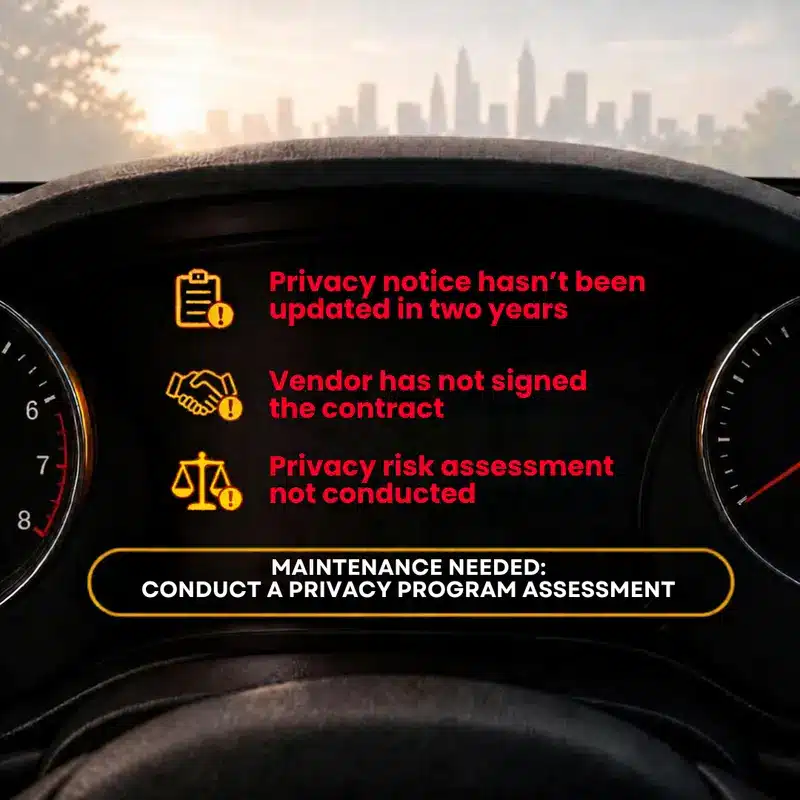
Cars tell you when something is wrong. The check engine light, the low tire pressure warning, the noise that was not there last week. It is so tempting to ignore them, especially when the car still seems to drive just fine. But those little warnings are exactly how a small, cheap problem turns into an expensive one on the side of the road. I would rather deal with the light now than the breakdown later.
In a privacy program, there are warning lights too. The growing backlog of data requests. The vendor who still has not signed a contract. The policy that has not been updated in two years. The team that keeps asking why they have to fill out the assessment. It is easy to keep driving and tell yourself it is fine. But hopefully, if you’ve been following along for some time, you know I say often that a privacy program is not a one-time thing you set up and forget. The warning lights are doing programs a favor, and privacy pros should deal with them while they are still just lights.
The best drivers never stop learning
As a passenger most school mornings these days and with 30+ years (gulp, did I really say that?) of experience, I am still learning, still catching myself, and still adjusting to new roads and new conditions. Teaching my daughter has not just made me a teacher, it has made me a more careful driver.
A privacy program is the same. There is no finish line where you have arrived and get to stop watching the road. The laws change, the technology changes, the business changes, and the best privacy leaders stay curious and keep learning right alongside everyone else.
Drive safely out there, for yourself and the rest of humanity. Drive your privacy program carefully for all the people trusting you with their data.
Wishing you a great week!
Jodi
💡 When you’re ready, here’s how we can help:
⚙ Privacy Advisory & Implementation: We help companies navigate privacy requirements with confidence. Our advisory support covers strategy, operations, and real-world implementation.
⚙ Fractional Privacy Services: We provide fractional privacy leadership tailored to your needs and pace. From program development to day-to-day support, we help you build and sustain a strong privacy program.