


Some firsts are awesome. Like the first time driving a car with your license. First job. First date. First trip to a meaningful place. First apartment/condo/home.
Other firsts are not and often coincide with someone’s passing, like a first missed birthday, anniversary, or holiday.
For those who know me, you may remember that my dad passed away in March. Today is the first Father’s Day that I can’t call my dad, I couldn’t send a card, and didn’t rush to UPS with my kids cards and a batch of homemade brownies (with nuts – if you’re in the no nut camp, we need to talk).
There’s nothing like a homemade card (that my teens still make for all occasions). When cleaning his desk in recent months, I came across some of the cards my kids made him years ago for his birthday (and it would have been similar for Father’s Day).
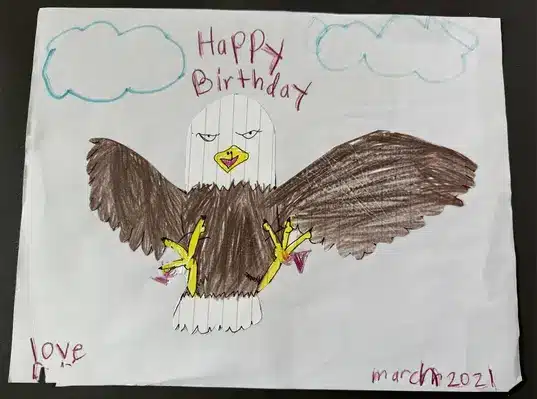
Despite the major lump in my throat, sadness in my eyes, and overall cloudy thoughts, I choose today to make it brighter and share some of the life lessons my dad taught me.
My dad was always instilling life lessons or teaching how to do something (whether you liked it or not). Here are a few of my favorite ones.
Do Your Best (DYB)
If you have read any of my content before, you have heard me say this. If my dad wanted to be known for anything, it would be this phrase. We’ve carried it down each generation.
DYB is not the same as being perfect, though he did like things just so (hmmm … wonder where I get it from?). The older I got, the more I learned that the aim for perfection was to help stretch you farther than what was just comfortable, or as I shared in a previous newsletter (#22), “good enough.”
His whole DYB philosophy was anchored in belief that people are capable of doing so much more than they think they can. Many people settle for good enough and leave much on the table, whether that be sales, opportunities, memories, capabilities, grades, fill in the blank on what it could be.
While on my recent Disney cruise, it seemed fitting to read Bob Iger’s book, The Ride of a Lifetime: Lessons Learned from 15 Years as CEO of the Walt Disney Company, which was one of the best business books I’ve read in a long time. I didn’t want it to end.
Mr. Iger (calling him Bob seems like I know him, Mr. Iger too formal but more appropriate) also talks about pushing teams. My takeaway wasn’t that it had to be 100% perfect, but pretty darn close, because that’s what customers expect and that’s what people are more than capable of. Only focusing on being perfect is also NOT the point.
DYB is where you push through just past that point where you think “this is fine” to giving it “all you got” without hurting yourself.
As an avid Peloton rider, the instructors are constantly reminding people that they can do the hard hill or just ride a little longer. It’s not about being a certain number on the leaderboard, it’s about doing a personal best (and perhaps that’s why it shows your personal record).
Show emotions
My dad was an emotional guy. He’d cry during the Hallmark movie (yes, he liked watching those with my mom. He also loved football games and superhero movies). I think he cried at all the big events in my life – graduation, wedding, births. They were tears of joy and pride. He told us all the time he loved us.
Professionally, he showed appropriate emotions, like joy and sadness, when he talked with people. You know the bigger than life personality – that was my dad.
While there is a balance of just how much emotion to show and when, I also think sometimes it’s been pushed the opposite direction with people showing nothing. We have enough AI around – who really wants a robotic person on the Zoom call, coffee chat, or just hearing the words in a monotone voice, “nice job.”
I think it’s OK to embrace the emotions we humans have. It’s what makes us such a cool and special species. He taught me the importance of telling people how you feel, to encourage them.
Think in your life, who could benefit from hearing how amazing they are? When was the last time you told them? Maybe it’s time for a reminder.
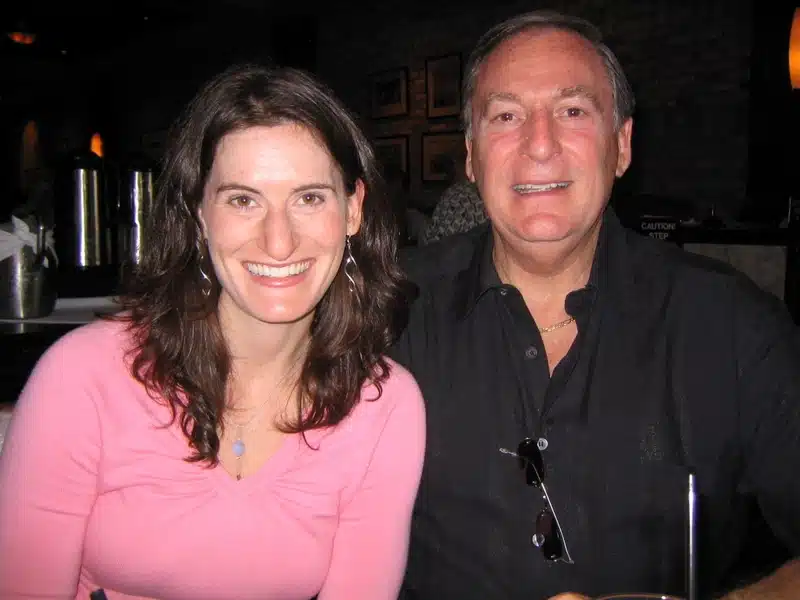
Connect with people
Piggybacking on showing emotion, my dad knew how to really connect with people. You know that expression – someone could talk to a wall? Well, that’s my dad. He knew how to strike a conversation with anyone, anywhere, anytime.
How did he do it? He asked people questions that got them talking about themselves. He loved giving compliments – he noticed a smile, a clothing garment, a piece of jewelry. He wanted people to feel good about themselves. He asked enough questions until he found a common connection point.
He was in sales his entire life. He also never stopped learning. He was listening to the gurus of his era (and some of these teachers are still around) such as Tom Hopkins, Dale Carnegie, Zig Ziglar, and so many others. While they teach so many different aspects of sales, one of the constants is to really find a way to connect with your prospects and customers.
As a kid sandwiched between my two brothers on 18-hour road trips, forced to listen to these sales cassette tapes (which I hear are making a comeback!), I didn’t appreciate their wisdom. Now I do, and I’m convinced their messages seeped into my brain while my parents thought we were sleeping!
Buying something is an emotional purchase even if it’s B2B. People buy when they like someone, then trust them. It’s easier to do that when you get to “know” someone.
While there are oodles of studies and articles, I liked the easy to understand explanation of this one:
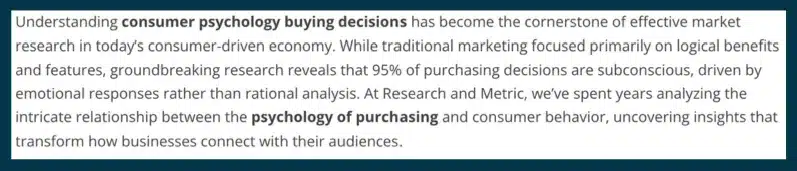
And for anyone thinking this just impacts B2C not true:

Needing to influence within an organization? This idea of connection, like, and trust applies internally too. Your business stakeholders might not care as much about privacy as you do. They will listen to those they have an emotional connection to. The time spent to truly get to know someone will yield dividends in a work sense.
Admit Mistakes
He was adamant about telling the truth, and his view was when you make a mistake, own it and state the truth.
My dad taught me that integrity is central to character in all of life’s relationships – friends, family, and professional.
I recently overextended myself, and in the process, made a few people less than happy with me. The easy route would be to hide by email. The harder, more appropriate path was to pick up the phone and explain my situation. Was it hard? Absolutely. Was it the right thing to do to smooth a relationship that means a great deal to me? Yes.
Email and text lose tone of voice and context. When you have to speak your thoughts immediately and see and hear the person’s response, it makes the exchange harder yet more truthful.
Always take the more truthful and “right” path even if it’s harder.
Be scrappy and creative
My dad didn’t like to waste anything. My prior posts about him highlighted just how much stuff he collected, and sometimes it was useful.
A glass jar really can be cleaned and makes a great holder for something else, like pencils or small knick-knacks. My daughter picked this habit up and uses them to store beads, sewing items, or any of her many other crafting hobbies.
You never know what random household item you’ll need for a school project or a prop to hold something up that might fall.
While he probably didn’t need reams of scrap paper, the idea of cutting a letter-size piece of paper into four rectangles really is useful. Not as pretty as regular scratch/note paper but serves the same purpose. In fact, I can’t actually buy pretty scrap paper or Post-It notes because I have his “be resourceful” ingrained. Folders can be reused (for those still using paper). And let’s be honest, who hasn’t regifted a gift bag?
Either in business or personally, being scrappy means questioning: Do I really need this new thing? Or can I make do with what I have? How far can this dollar really stretch? How can I save money for the company? What’s a more budget-friendly option?
Get Hands On
My dad was active and always wanted to do something with his hands, and typing definitely didn’t count. As a kid, he was a drummer (in an actual band!), he made kit airplanes, took apart cars, and eventually had all the tools Sears would sell him (remember Craftsman, anyone?). And he could also be called a woodworker, gardener, tree chopper, and could fix anything (who needed YouTube when I had my dad?).
And then this same man, after walking in from a Sunday in the yard all dirty, loved fashionable clothes, getting dressed up, and nothing made him more proud than to take my mom out for a nice evening.
While I didn’t get most of his fix-it skills, he did teach me how to use real tools (I came to our marriage with my own toolbox), and I am not afraid of getting dirty or messy. Now I prefer to hike outside than chop trees (yes, I really helped my dad use a log splitter and carry all the new firewood into the house).
The biggest lesson of it all? I have a huge appreciation for the value of hard work, whether it’s physical labor or the feeling after successfully completing a big work project.
For him, using his hands was his outlet where his creative juices flowed, and it was therapeutic for him. What’s that for you? For some, it’s sports, hiking, traveling, or cooking.
Find your outlet and dive deep.
Positive attitude
My dad was a glass-half-full guy and passed that down to me. I have on my walls the Successories poster on Attitude, that’s how strongly I believe in it. Taking a picture with a glass front is tricky to get it not to reflect everything else in the room. So here’s what it looks like, courtesy of flickr.
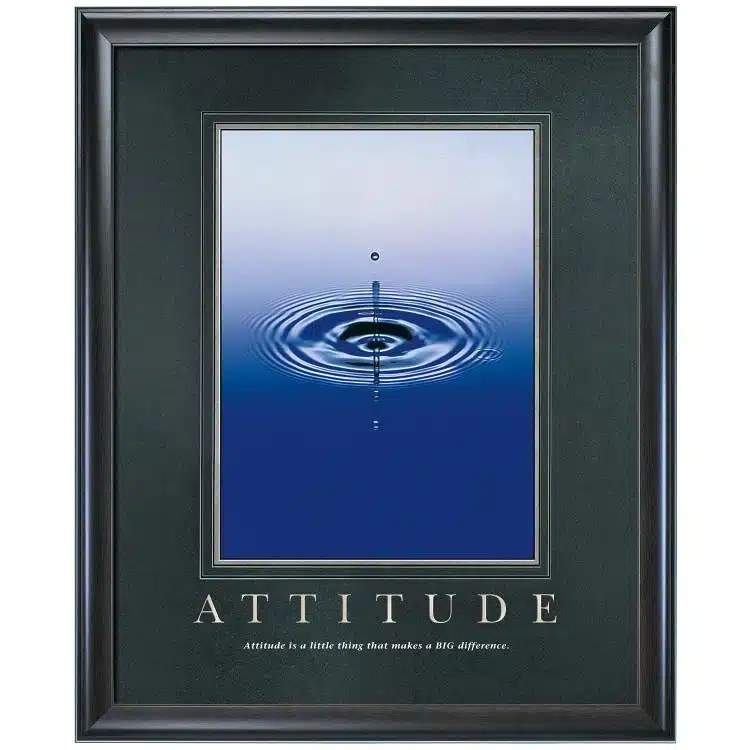
Life is hard, and people have real challenges – that could be at work, parenting, health, family, financial, friends, dreams, and more. Despite however big the challenges in my life have been (and they’ve been big), I take each day at a time and overall a half-full approach.
A positive attitude helps build resiliency to reframe the obstacles as bumps in the road that need creative solutions.
Thank you for allowing me to share a little bit more about a special man who shaped who I am today. I hope one of these lessons resonates with you.
To all the dads out there, wishing you a Happy Father’s Day!
Jodi
💡 When you’re ready, here’s how we can help:
⚙ Privacy Advisory & Implementation: We help companies navigate privacy requirements with confidence. Our advisory support covers strategy, operations, and real-world implementation.
⚙ Fractional Privacy Services: We provide fractional privacy leadership tailored to your needs and pace. From program development to day-to-day support, we help you build and sustain a strong privacy program.